Skip to content


When a diesel fuel tank supplies multiple machines, the quality of the fuel is determined before it reaches the engine. A properly selected filter in the tank, the tanker, or the transfer equipment prevents water, rust, and dirt from reaching each vehicle and protects filters and injection systems that cost much more than a single filter element.
At Filtros Castelló, with more than 20,000 active product listings and over 50 years of experience in filtration distribution, we are frequently consulted by fleet and equipment rental companies looking to standardize their filtration systems. This guide explains the types of filters available for tanks and fluid transfer, how to select them, and how to maintain them.

Why filter diesel fuel in the tank and not just in the engine
Filtering only at each engine shifts the problem to each vehicle: filters that become clogged sooner, more downtime, more filter changes, and a higher risk of injection system issues. Filtering the fuel during storage and at the point of dispensing involves a single, centralized intervention and reduces the number of machines that receive contaminated fuel.
Diesel fuel can degrade right in the tank itself: it accumulates sediment, rust, and water from condensation. If you’d like to learn more about this, check out our article on water in the diesel fuel tank.
Where to install the filter: tank, transfer line, and dispensing point
| Point | Function | When to Use |
|---|---|---|
| Tank Suction | Traps coarse debris before the transfer pump | Whenever the tank accumulates sediment or is exposed to the elements |
| Transfer or filling line | Filters the fuel as it enters the tank from a tanker or drum | When the fuel supply is not quality-controlled |
| Fueling point (dispenser or nozzle) | Final filtration before filling the machine’s tank | Fleets and rentals: prevents water or particles from entering each vehicle |
| In the machine (pre-filter and main filter) | Final engine protection | Always; not a substitute for the previous steps |
Each stage serves its purpose. A fuel supply filter does not eliminate the need for the machine’s own filtration system; rather, it complements it and extends its service life.
Types of filters for diesel fuel tanks
Particle filters
They trap sediment and dirt. They are classified by filtration rating in microns: the lower the number, the finer the filtration and the greater the protection, but also the greater the restriction on fuel flow.
Water-separating filters
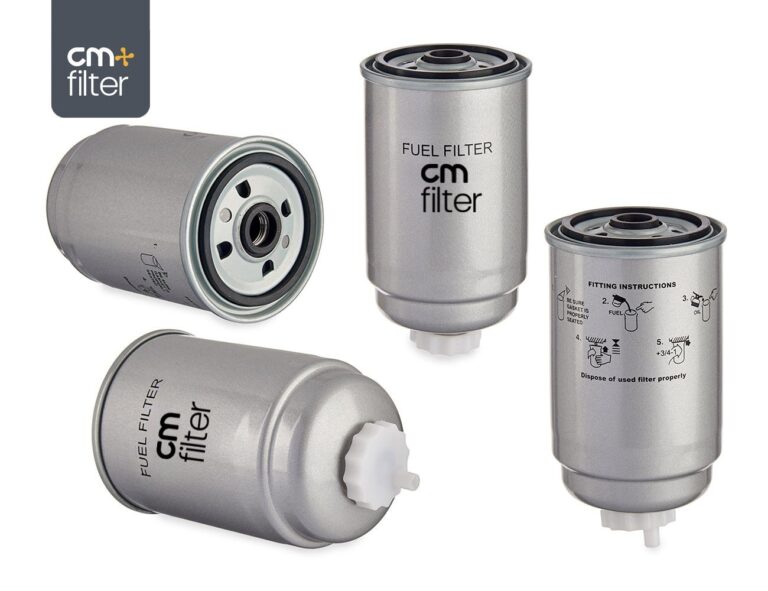
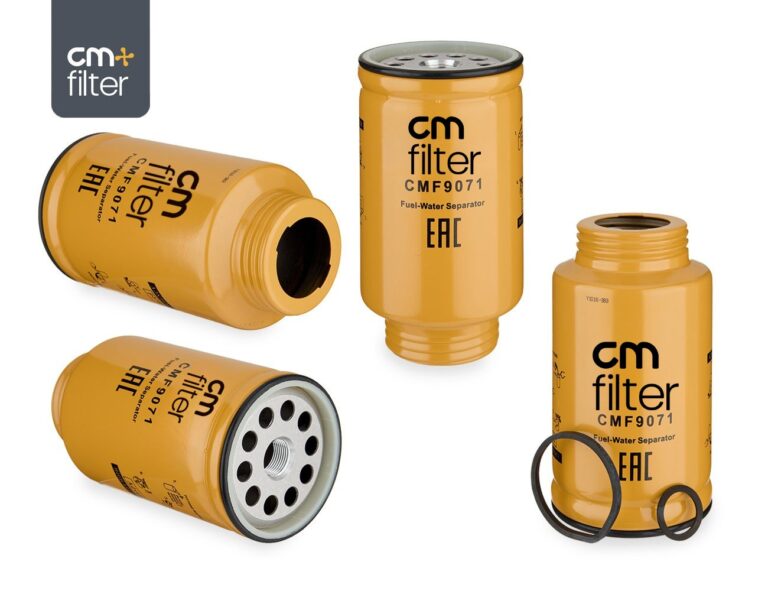
They combine particle retention with the separation of free water. They are the most recommended when fuel is stored for long periods or outdoors.
Filters with a water-absorbing element
They incorporate a medium that retains water and becomes more restrictive as it becomes saturated, thereby cutting off or reducing the flow when contamination is present. They are used at fueling points to prevent water from reaching the machine.
Prefilters and in-line filters with a decanter
They combine a mesh screen, a settling chamber, and, in some models, heating or purging. They are commonly found at the inlet of the transfer circuit.
You can see how these components work together in our guide to the complete diesel fuel filtration system.

Microns, flow rate, and water: how to choose
- Filtration rating (microns): must be consistent with the sensitivity of the machines being supplied. Modern high-pressure injection engines require finer filtration than older ones.
- Flow rate: The filter must handle the flow rate of the transfer pump without causing excessive restriction. An undersized filter slows down refueling and becomes clogged sooner.
- Water retention capacity: For fleets with external fuel tanks or low usage, it is advisable to choose filters with water separation or absorption capabilities.
- Connections and compatibility: thread type and size of the filter head, pipe diameter, and pump type.
- Ease of replacement: Cartridges or filter elements that can be replaced quickly and without special tools reduce downtime.
The specific values depend on the equipment and the fuel. If you’re unsure, the pump model and tank capacity are enough for us to provide guidance.
Guidelines for fleets and rental companies
- Standardize part numbers. Reducing the number of filter models simplifies purchasing, inventory management, and maintenance.
- Document changes. Record the date and time or the number of liters dispensed so you know when it’s time to replace the filter.
- Prioritize the supply point. In rental operations, where each machine returns after being used for a different purpose, a filter at the dispenser prevents the equipment’s tanks from becoming contaminated.
- Keep spare parts in stock. A supply outage to replace a filter without a spare costs more than the filter itself.
- Plan seasonally. Before periods of heavy use, inspect and replace the components of the dispensing equipment.
Maintenance: when to change a fuel tank filter
There is no universal interval: it depends on the volume of fuel supplied, the cleanliness of the fuel, and the type of filter. There are three clear signs that it’s time to replace it:
- Drop in flow rate at the nozzle or transfer pump.
- Differential pressure gauge (if equipped) in the transition zone.
- Visible water or debris in the tank or when draining.
Follow the filter manufacturer’s schedule and change the filter sooner if there is sediment in the tank or if the fuel supply is of poor quality. For the machine’s own filter, we’ll explain how often the fuel filter should be changed.
Common mistakes when filtering stored diesel fuel
- Installing a filter that is too fine for the pump, which slows down the flow rate and clogs the filter element quickly.
- Failing to bleed or check the filter until fuel stops flowing.
- Assuming that the tank filter replaces the machine’s filter.
- Ignoring the condition of the tank: a new filter won’t fix a tank full of sludge.
- Mixing filter elements from different sources without checking that they fit in the filter head.
Filtros Castelló has been distributing CM Filter, its own brand since 1994, as a compatible technical alternative, and processes fuel as part of its fuel filtration solution.

Frequently asked questions about the diesel tank filter
Do you manage a fleet or a rental company and want to standardize your diesel fuel filtration? Contact our team, and we’ll advise you based on your tanks and supply volume.