Skip to content


A truck never stops. It runs in shifts, carries tons of cargo, travels thousands of kilometers a month, and operates in conditions ranging from the extreme cold of the mountains to the stifling heat of a logistics hub in August.
In this context, filters are not mere consumables: they are the first line of defense that separates an engine in perfect condition from a breakdown on the road that brings operations to a standstill and generates unexpected costs.
This guide goes through, one by one, the filters required for a heavy-duty transport vehicle — rigids, semi-trailers, tractor-trailers, or delivery vans from manufacturers such as IVECO, DAF, Mercedes, MAN, Scania, Volvo Trucks, Renault Trucks, and many others used in the Spanish filtration market. We’ll explain, using clear technical criteria, how to choose them correctly and get the most out of them.

Why Leakage Is Critical in Road Transportation
The diesel engines in modern trucks are high-precision machines. Common-rail injection systems operate at pressures ranging from 1,800 to 2,500 bar. The turbochargers spin at 200,000 rpm.
Tolerances between components are measured in microns. A single dust particle or a drop of water in the wrong place can result in a ruined injector, a seized turbocharger, or a high-pressure pump that is out of service.
In addition, the Euro VI engines that power most trucks today incorporate complex exhaust aftertreatment systems—FAP, SCR, EGR, AdBlue—which introduce new critical filtration points that did not exist in previous generations.
As a result, a modern truck has more filters than ever before, and the condition of each one has a direct impact on fuel consumption, emissions, vehicle availability, and maintenance costs.
Essential Filters for a Truck
Engine air filter
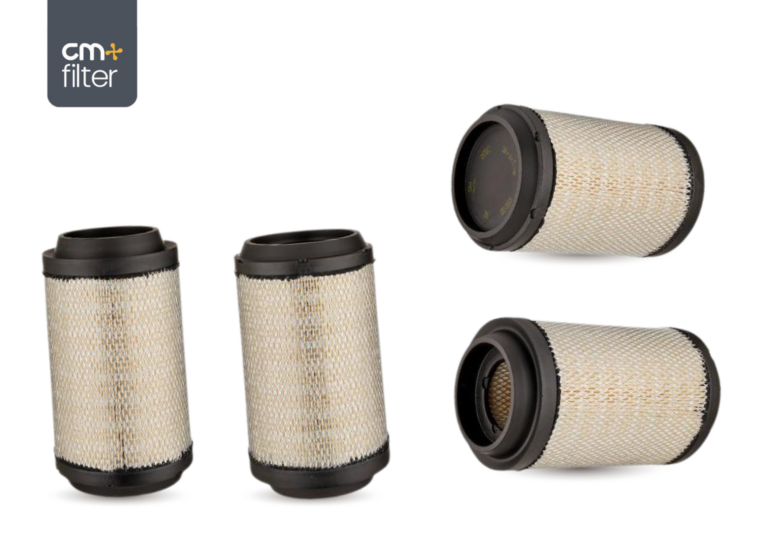
It is the engine’s first line of defense. In a long-haul truck traveling on the highway, the main challenge is the volume of air the engine processes: at full load, a 13-liter engine draws in more than 1,000 liters of air per minute. That volume of air carries with it dust, insects, rubber particles from other tires, road salt in winter conditions, and all kinds of dirt.

The engine air filter traps these particles before they reach the turbocharger and the cylinders, where they would act as an abrasive on the pistons, piston rings, and cylinder liners.
- Signs of a clogged air filter: loss of power, increased fuel consumption, black smoke from the exhaust, and an air restriction warning light on the dashboard.
- Recommended interval: every 80,000–120,000 km on highways; sooner in dusty environments (construction sites, quarries, bulk material sites).
Tip: Modern trucks are equipped with air restriction indicators (vacuum gauge or electronic indicator). Use these as your primary guide for replacement, not the odometer. A filter may become clogged sooner if the vehicle has been operating in dusty conditions.
Engine oil filter
Truck engine oil operates under much more demanding conditions than passenger car engine oil: higher temperatures, greater volume due to the engine’s size, and exposure to more combustion byproducts in high-performance engines.

The oil filter traps metal particles resulting from wear, combustion residues, and the breakdown products of the oil itself. A filter that is in poor condition or of low quality can allow abrasive particles to pass through, accelerating wear on the crankshaft, connecting rod bearings, and camshafts.
- Recommended interval: every 30,000–50,000 km or as specified in the manufacturer’s maintenance schedule.
- Important: Always replace the oil filter with every oil change. They are interdependent consumables.
For fleets: Regular oil analysis (ferrography) helps detect premature wear before it leads to a serious breakdown and allows for optimizing the actual oil change interval based on the oil’s condition, rather than just on time or mileage.
Fuel filter (diesel)
This is the most critical filter in today’s trucks with common-rail injection engines. The injectors in these engines have tolerances of 2 to 3 microns and operate at extremely high pressures. A single solid particle or even the slightest trace of water in the fuel can completely ruin an injector —with a replacement cost that can exceed €500 per injector.

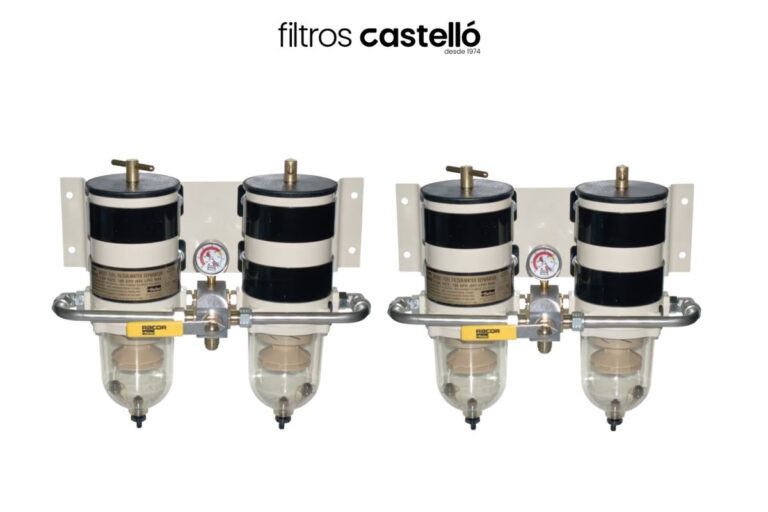
The diesel fuel filtration system in trucks typically consists of two stages: a water-separating prefilter (located in the fuel tank or before the low-pressure pump) and a fine filter that traps particles measuring 2–5 microns before the high-pressure pump.
- Signs of a clogged diesel fuel filter: difficulty starting the engine when cold, loss of power, rough idling, and the fuel system warning light.
- The water separator must be emptied periodically and whenever the water level indicator signals that it is full.
- Recommended replacement interval for the fine filter: every 30,000–60,000 km, or as specified by the manufacturer.
Be careful with diesel fuel of questionable quality: fuel with a high water content or solid contaminants can clog filters long before the scheduled maintenance interval. In winter, paraffinic diesel can clog fine filters that were previously in good condition.
AdBlue/Urea Filter (SCR System)
All Euro VI trucks—and most Euro V trucks—are equipped with a selective catalytic reduction (SCR) system that injects a urea solution (AdBlue) into the exhaust gases to reduce nitrogen oxide (NOx) emissions. This system has its own filter, which protects the urea injectors from contamination by the fluid.

The AdBlue filter is relatively small but very sensitive: the urea solution is corrosive, and any solid particles in the system can clog the microchannels of the SCR injector. A failure in the SCR system not only triggers alarms and may result in speed limitations due to regulations, but it can also lead to the vehicle being held up at vehicle inspection stations or emissions testing stations.
- Recommended interval: every 100,000–150,000 km or as specified by the manufacturer.
- Always use ISO 22241-certified AdBlue. Low-quality AdBlue can contaminate the system and shorten the filter’s service life.
Cabin filter (driver’s compartment)
Drivers spend up to 10–12 hours a day in the cab. The quality of the air they breathe during those hours has a direct impact on their concentration, well-being, and long-term health.
A clogged cabin air filter doesn’t just cause unpleasant odors: it can contribute to driver fatigue due to poor air quality and damage the air conditioning evaporator, which is expensive to replace.

In long-haul trucks, it is recommended to use cabin filters with activated carbon, which, in addition to trapping dust and particles, remove gases and vapors
hydrocarbons and odors from heavy traffic or loading areas.
In urban distribution fleets, where drivers are constantly opening and closing the doors and working in highly polluted environments, an annual replacement is the minimum recommended.
Transmission filter and gearbox
Trucks equipped with automated manual transmissions (AMT) or automatic transmissions use pressurized transmission fluid. The transmission filter traps metal particles resulting from gear and clutch wear before they circulate through the system’s hydraulic lines.
A worn transmission filter can cause rough shifting, jerking, clutch slippage, and, in severe cases, damage to the transmission. It is one of the most overlooked filters in fleet maintenance, yet one of the most costly to repair if it fails.
- Recommended interval: every 100,000–150,000 km or with every transmission oil change.
Filters by Truck Type
Long-haul truck (tractor-trailer)
Prioritize high-quality engine filters (oil, fuel, air) with extended replacement intervals to reduce breakdowns on the road. Use an activated-carbon cabin filter for long workdays. Pay special attention to the AdBlue system due to emissions regulations in transit countries (France, Germany, and the Benelux countries have strict controls).
Urban delivery truck
Engines operate under conditions of varying loads, frequent cold starts, heavy traffic, and frequent maneuvering. The oil filter works harder in city driving than on the highway. Oil change intervals should be based on the severity of use, not just the odometer reading.
Construction vehicles and dump trucks
I work in environments with high concentrations of dust, dirt, and gravel. The air filter is the component that undergoes the most wear and tear: it may need to be replaced every 30,000–40,000 km or even sooner. The hydraulic filter (if the truck has a hydraulic dump system) should also be checked more frequently in abrasive environments.
Refrigerated trucks
In addition to the tractor engine, they are equipped with an auxiliary engine for the refrigeration unit, which has its own oil and air filters. The operating environment, with its extreme temperature fluctuations, affects the viscosity of the oil and the service life of the filter seals.
How to Manage Filters in a Truck Fleet
For fleets of more than 5–10 vehicles, reactive filter management (replacing filters only when they fail) is the most expensive approach. Scheduled preventive maintenance reduces total maintenance costs and, above all, unplanned downtime.
Some best practices for professional fleets:
- Standardize part numbers: Using the same brands and part numbers for the entire fleet simplifies inventory management and reduces errors.
- Set maintenance intervals based on usage severity: A long-haul truck and an urban delivery truck do not have the same optimal maintenance intervals, even if they are the same model.
- Oil analysis: In fleets with high-cost engines, periodic analysis helps anticipate failures and optimize maintenance intervals.
- In-house inventory of critical supplies: Keeping the highest-turnover filters in stock eliminates the need to wait for a supplier in the event of a breakdown.
At Filtros Castelló, we work with fleet managers and commercial vehicle repair shops, supplying filters for trucks of all brands—such as DAF, Volvo, Scania, MAN, Mercedes-Benz, Iveco, and Renault Trucks—with more than 20,000 active SKUs in stock at our warehouse in Massanassa, Valencia.
Conclusion
Truck filters offer the best return on investment in heavy-duty transportation: their cost is minimal compared to that of an engine failure, a blown fuel injector, or a seized transmission.
Knowing which filter does what, choosing the right part number, and adhering to replacement intervals is the difference between a profitable fleet and a constant source of unexpected problems.
Whether you manage a transportation fleet or maintain your own vehicles, the team at Filtros Castelló can advise you on the exact part numbers for each model and help you organize your supply. Contact us at info@filtroscastello.com or browse our catalog at filtroscastello.com.