Skip to content


A tractor’s hydraulic system powers the lift, the auxiliary valves, the power steering, and, on many models, the transmission and brakes as well. All of these components operate using the same oil, and that oil relies on the tractor’s hydraulic filter to do its job. When the filter becomes clogged or an inappropriate one is installed, the system loses pressure, runs hot, and eventually wears out pumps and valves, the repair of which costs much more than the filter itself.
At Filtros Castelló, we’ve been supplying filtration systems for agricultural machinery since 1974. In this guide, we’ll go over which hydraulic filters are found in a tractor, how often they should be replaced, what signs indicate they’re nearing the end of their service life, and how to choose a compatible part without making a mistake. If you’re looking for a more general explanation of how they work, check out our article on what a hydraulic filter is and what it’s used for.

What does the hydraulic filter do in a tractor?
The function of the hydraulic filter is to trap solid particles that contaminate the oil: metal wear debris, dust that enters through the seals, residue from gaskets, and dirt that gets in when the tank is refilled. These particles are what cause scratches on the surfaces of pumps, spool valves, and cylinders. Clean oil maintains stable pressure, reduces overheating in the hydraulic system, and extends the life of all the components through which it flows.
The challenge is greater with a tractor than with other machines: it operates in dusty and muddy conditions, experiences sudden temperature changes, and uses implements that are constantly being attached and detached, which introduces contamination into the quick-connect couplings. That is why agricultural hydraulic filtration requires properly sized components and timely replacements.
How many hydraulic filters does a tractor have, and what types are they?
Not all tractors have the same configuration. Depending on the make, model, and year, the system may include one or more of the following components:
Suction filter (or strainer)
It is located before the pump, usually inside the tank or the transmission housing. It traps the coarsest debris and protects the pump from large particles. Its mesh is wider to avoid restricting the oil flow.
Pressure filter
It is located downstream of the pump and filters the oil flowing to the distributors and the lift with greater precision. It must withstand the circuit’s operating pressure, so it is built more robustly.
Return filter
It collects the oil returning to the reservoir, trapping the particles generated during use. It is the most common type used in routine maintenance.
Cartridge filter and screw-on filter
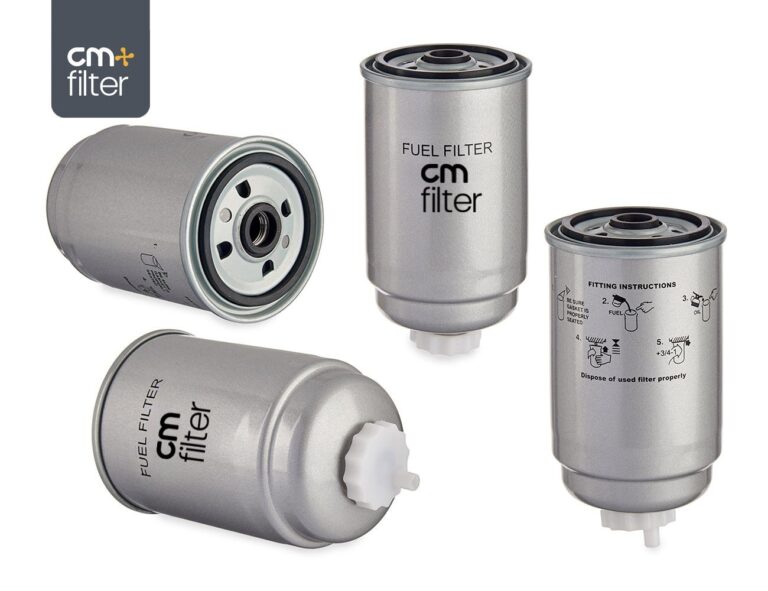
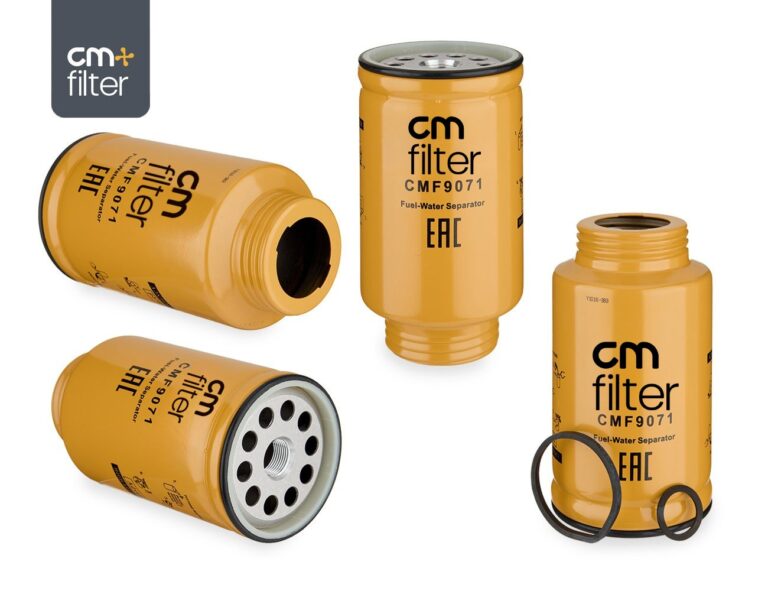
These are the two most common types. The cartridge is inserted into a housing, and only the filter element is replaced; the screw-on filter is a single unit that is unscrewed and replaced entirely. Tractors with hydrostatic transmission (HST) typically also have specific filters for that circuit.
A single tractor may combine several types, such as an intake strainer and a return cartridge filter. That is why it is important to identify how many filters a specific model has before ordering replacement parts.

Hydraulic and transmission fluid: why they’re often used together
In many tractors, the oil in the hydraulic system is the same oil that lubricates the transmission and differential, so they share a common reservoir. This has a practical consequence: the hydraulic filter not only protects the pumps, but also the gears and clutches, and any wear particles from the transmission end up in it. When changing the oil, it’s best to replace the filter at the same time; a new filter with old oil—or vice versa—leaves the job half done.
Always use the oil specification indicated in the manufacturer’s manual. An unapproved oil can alter the performance of wet-type clutches and brakes, as well as affect the filtration process itself.
How often should the tractor’s hydraulic filter be changed?
There is no single interval that applies to all tractors. Different makes and models have different intervals, which are usually expressed in operating hours with a time limit (for example, “every X hours or once a year, whichever comes first”). The most reliable source is always your tractor’s maintenance manual.
What we can say, however, is which factors shorten these intervals:
- Work in very dusty environments (dry grain, loose soil operations).
- Intensive use with hydraulic implements (front-end loaders, tedders, balers), due to the high number of connections and disconnections.
- Oil of questionable quality or filled using dirty funnels and drums.
- Extreme temperatures, which cause the oil to degrade more quickly.
In these cases, it makes sense to replace the filter sooner than the standard schedule calls for—something your repair shop or our technical team can help you evaluate.
Signs of a clogged hydraulic filter
Before causing a breakdown, a clogged filter usually shows signs:
- The lift moves slowly or jerks, or it cannot lift the implement when fully loaded.
- The auxiliary valves respond slowly.
- The oil gets hotter than normal.
- Noises or whistling sounds from the pump, which may indicate that it is having difficulty drawing in oil.
- Clogged filter or pressure warning light on the dashboard, on models equipped with one.
- Dark, milky-looking oil or oil with visible particles when draining the reservoir.
If any of these symptoms appear, simply changing the filter isn’t enough: you must also check the condition of the oil and rule out the possibility that the contamination is coming from a damaged component.
How to identify your tractor’s hydraulic filter
Getting the part number right saves you from returns and downtime. Here’s the information we need:
- Tractor make, model, and year, and serial or chassis number.
- Part number of the current filter, stamped on the body or on the label. This is the most reliable information.
- Type: cartridge or screw-on, and location (suction, pressure, or return).
- Basic dimensions: outer diameter, inner diameter, height, and type of thread or gasket.
- If the tractor is equipped with a Hi-Lo, HST, or other transmission variants, the filter may differ even if the model is the same.
Using the original part number, we can find the equivalent item in our catalog. If you don’t have it, just give us the model number and dimensions, and we’ll check it with our team.

Original, equivalent, and CM Filter: what are the differences?
An equivalent filter is not, by definition, a “worse” filter; what matters is that it meets the original’s specifications: dimensions, thread, valves, filtration rating, pressure resistance, and filter media quality. A poorly manufactured filter, even if it fits, may have lower retention capacity or open at incorrect pressures.
Filtros Castelló has been distributing CM Filter, its own brand since 1994, as a technically compatible alternative for numerous agricultural machinery models, and also works with other leading filtration brands. Our approach is to select based on the tractor’s actual application, not on the label.
Common mistakes when changing the hydraulic filter
- Reusing the old gasket or failing to lubricate the new one, which causes leaks or air ingress.
- Over-tightening the screw-on filter, which deforms the gasket and makes the next replacement difficult.
- Failing to clean the area before opening, allowing dirt to enter a clean system.
- Mixing oils without verifying that they are compatible.
- Failing to bleed the system or check the oil level after the change while the engine is running.
- Changing only the filter and leaving the degraded oil in the system.
Frequently asked questions about tractor hydraulic filters
Not sure about the part number for your tractor’s hydraulic filter? Contact our team with your tractor’s model and dimensions, and we’ll help you find the right compatible option.