Skip to content


Table of contents
When someone is looking for industrial filters for their machinery, they usually go straight to the part number in the manufacturer’s catalog or, if they don’t have it, ask for “something equivalent.” The problem arises when that part number is provided without any additional context: without knowing the equipment’s operating environment, the actual level of contamination in the environment, or the number of hours of use per day
An excavator in a granite quarry and a loader at a residential development site may use the same model of air filter according to the manufacturer’s catalog, but the concentration of abrasive dust that the former is exposed to in one hour of work may be ten times greater than what the latter is exposed to over an entire workday. The same filter, installed under radically different conditions, will have a completely different service life and provide a very different level of actual protection.

Industrial filters for machinery are not interchangeable across industries. The working environment—the type of Industrial filters for machinery are not interchangeable across industries. The working environment—the type of dust, humidity, temperature, continuous operating hours, and specific contaminants—determines which filtration systems are a priority, what efficiency is required for each one, and how often they should be inspected. This article explains exactly that: what each sector needs and why.
Why the Industry Is Revolutionizing Industrial Filtration
Every work environment generates a different type of pollution. The fine organic dust kicked up by a combine harvester in the middle of the grain harvest is not the same as the crystalline silica particles generated by a crusher in a quarry. The saline moisture that corrodes a ship’s components is not the same as the condensed moisture that forms in a truck’s fuel in the winter.
These factors determine, sector by sector:
- Which filtration systems are critical and which are secondary.
- What filtration efficiency is required for each system (micron rating, beta ratio)?
- How often should the filter elements be inspected and replaced?
- What type of prefiltration or additional stages are necessary?
- What specific risks are involved in not filtering properly in that particular environment?
Understanding these factors by sector is the difference between reactive filtration management—which replaces filters only after a problem has arisen—and preventive management, which protects equipment, reduces downtime, and optimizes maintenance costs.
Industrial Filters for Public Works and Construction
Public works machinery—excavators, motor graders, compactors, backhoes, dump trucks—operates in environments where dust generated by the work itself is a constant presence: disturbed soil, aggregates, mortar, powdered concrete, and diesel exhaust in confined spaces.
Priority Filtration Systems
- Engine air filter
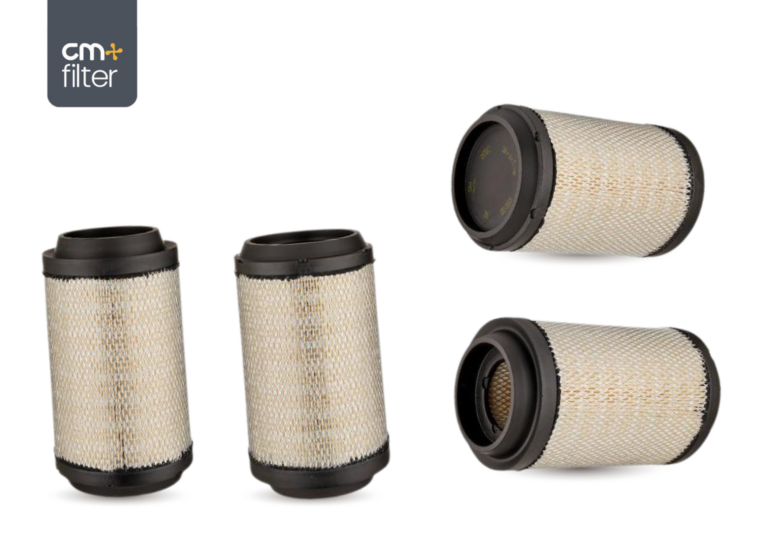
Top priority. Particle concentrations at construction sites can far exceed those on a conventional highway. Air filters for public works must incorporate cyclonic pre-filters that remove the coarsest particles before they reach the main filter element. Without this pre-filtration, the main filter element becomes saturated within a few hours in high-dust environments.
- Hydraulic filters
The hydraulic systems of excavators and motor graders operate continuously at high pressures. Contamination of the hydraulic fluid beyond the specified cleanliness level (ISO 4406) causes cumulative wear on control valves, pumps, and actuators. On construction sites, where work cycles are intensive, hydraulic filter inspection intervals cannot be based solely on calendar hours: the differential pressure gauge is the true benchmark.
- Fuel filter with water separator
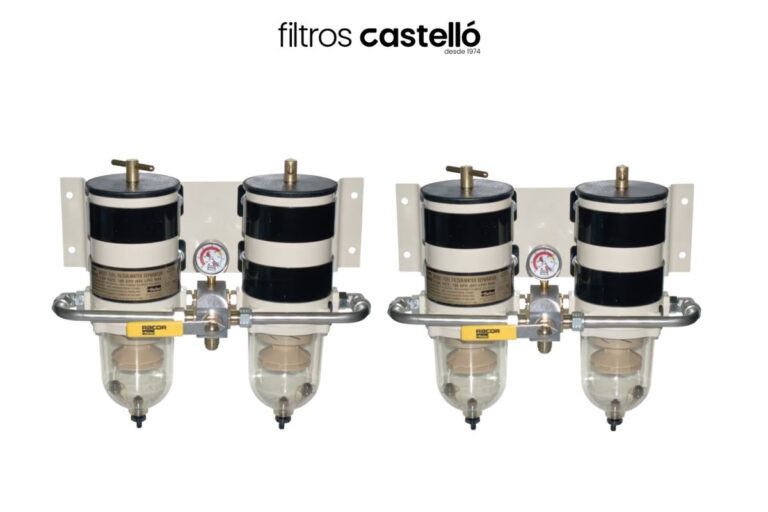
Construction crews refuel under variable conditions, sometimes from exposed mobile tanks. Water in the fuel is a constant risk for common rail injection systems. A high-efficiency water-fuel separator is essential.

- Cabin filter
Construction equipment operators spend entire workdays in their cabs in environments with dust, exhaust fumes, and, in some cases, occupational silicosis. The cabin filter directly protects the operator’s health and must be replaced more frequently than under normal conditions.
What sets this sector apart
In public works projects, equipment downtime has a direct impact on the project timeline. For this reason, filter management must be particularly proactive: replace filters before visible clogging occurs, keep replacement filters in stock at the job site, and perform inspections based on actual hours of operation, not on a fixed schedule.
Check out our page on solutions for the public works sector.
Industrial Filters for Mines and Quarries
Mining and quarrying operations present the most demanding environment for any filtration system. Concentrations of mineral dust—quartz, silica, carbonates, sulfides—can exceed levels at a conventional construction site by a factor of tens. Equipment operates in continuous shifts, often around the clock, and any unplanned downtime has an immediate economic impact.
Priority Filtration Systems
- High-capacity air filters with cyclonic pre-filtration
In mining and quarrying, the cyclonic prefilter is not optional: it is the first essential barrier. These systems use centrifugation to separate the coarsest particles—sand, coarse mineral dust—before they reach the main filter element. Without this stage, the filter element would become clogged within hours in environments with high dust concentrations.
- High-beta-ratio hydraulic filtration
Mining excavators, crushers, loaders, and dump trucks push their hydraulic systems to the limit. Hydraulic filters with high beta ratios (β10(c) ≥ 200) are required to ensure the fluid cleanliness specified by component manufacturers. In systems with servo valves or proportional control valves, the requirements are even stricter.
- Two-stage fuel filters
Large-displacement diesel engines used in mining—such as Cummins, Perkins, Caterpillar, Komatsu, and others—operate with common-rail systems that require fuel with minimal particulate and water contamination. A two-stage filtration system (water separator prefilter + fine filter) is standard on this equipment.
- Cabin filters with protection against mineral dust
The ISO 23875:2021 standard establishes specific requirements for air quality in heavy equipment cabs, particularly in sectors with exposure to mineral dust and silica. Cabin filters for mining applications must be highly effective at trapping fine particles and replaced frequently.

What sets this sector apart
In the mining industry, the cost of an engine or hydraulic system failure far exceeds the cost of even the best preventive filtration program. Regular oil analyses to detect wear particles, combined with high-efficiency filters, are standard practice in well-managed mining fleets.
Visit our website at for solutions for mines and quarries
Industrial Filters for the Agricultural Sector
Agricultural machinery—tractors, combines, balers, sprayers, seeders—operates in environments with pollution that is very different from that found on construction sites or in mining. The dust is predominantly organic: plant fragments, soil dust, spores, seeds, and crop residues. During harvest season, concentrations can be very high and persist for long periods.
Priority Filtration Systems
- Air filter
During harvest season, the load of suspended organic matter can clog an air filter in just a few hours if conditions are dry and the crop produces a lot of residue (sunflowers, corn, or grains under low-moisture conditions). Air restriction indicators are essential on agricultural machinery: filter changes cannot be scheduled at fixed times during peak season.
- Fuel filter with water separator
Tractors and harvesters are refueled in the field, often from portable tanks or tankers that can accumulate condensation. Coalescing water separators are especially important in agriculture, where refueling under uncontrolled conditions is common.
- Hydraulic filters
The hydraulic systems for implement lift mechanisms, power steering, and hitch systems are critical components of a tractor. In combine harvesters, the hydraulic systems that drive the platform and the continuously variable transmission systems require clean fluids. Inspect these systems based on operating hours, especially at the beginning and end of the harvest season.
- Cabin filter with pesticide protection
On farms where phytosanitary treatments are used, the cabin filter must contain activated carbon to trap pesticide and herbicide vapors. This is an occupational safety requirement, not just a matter of comfort. In many modern agricultural machines, the standard filter does not include this layer; it must be specifically requested.
What sets this sector apart
Seasonality is the key factor. Agricultural machinery is used primarily during short, intensive periods. Starting the season with filters in optimal condition and ending the season by checking the status of all systems is the practice that distinguishes agricultural fleet managers who experience breakdowns from those who do not.
Check out our page on solutions for the agricultural sector.
Industrial Filters for the Marine Industry
Engines and hydraulic equipment in marine environments are subjected to conditions that do not exist on land: constant salt-laden humidity, the temperature and pressure of seawater used as a coolant, HFO or MGO fuels with properties different from those of land-based diesel, and continuous operation on fishing vessels, transport vessels, or port work vessels.
Priority Filtration Systems
Fuel filters with high efficiency in water separation
In marine engines, the presence of water in the fuel is the primary risk. High-efficiency coalescing separators (over 98% efficiency according to ISO 16332) are the standard. Corrosion caused by salt water in injection systems is irreversible and extremely costly.
Oil filters compatible with marine lubricants
Marine engine oils are specifically formulated with a high base number (BN) to neutralize the acidity generated by fuels with higher sulfur content. Filters must be compatible with these formulations and must not trap the additives necessary for the oil to function properly.
Cooling Water Filters and Separators
In seawater-cooled marine engines, water filters prevent the cooling circuits from becoming clogged with algae, marine debris, and sediment. These are maintenance components that are often neglected, with serious consequences for engine temperature.
Hydraulic Filters for Steering and Maneuvering Systems
Hydraulic steering pumps, hatch systems, and cargo cranes on ships operate under temperature and salinity conditions that accelerate the degradation of hydraulic fluid. Marine hydraulic filters must be compatible with the specific environment and fluids used in these applications.
What sets this sector apart
Access to replacement parts is the critical logistical factor in the marine industry. A vessel at a port of call or on a fishing trip cannot wait weeks for a filter. Immediate availability of inventory and the correct identification of compatible part numbers are just as important as the filter’s technical quality.
Check out our page on solutions for the marine industry.
Industrial Filters for Lifting and Material Handling
Forklifts, stackers, scissor lifts, articulating lifts, electric pallet jacks, and overhead cranes operate in industrial environments where environmental pollution is generally lower than on construction sites or in mining operations, but where work cycles are very intensive and specific demands are placed on the hydraulic systems.
Priority Filtration Systems
Hydraulic filters
Hydraulic filtration is the number one priority in lifting and material handling. Lifting cylinders, lowering control valves, and hydraulic swing motors operate with fluids that must be maintained within the specified ISO 4406 standards. Contaminated fluid not only damages hydraulic components—it can also compromise the safety of lifting operations.
Engine or Transmission Oil Filters
In forklifts with internal combustion engines (LPG, gasoline, diesel), engine oil filters are critical given their intensive indoor use, where ventilation may be limited. In equipment with hydrostatic transmissions, the transmission filter protects a component with a high replacement cost.
Cabin filters
In operations conducted in cold storage rooms, chemical warehouses, or facilities with specific types of dust (flour mills, feed warehouses, processing plants), the cabin filter protects the operator from environmental conditions that can be particularly harsh.
What sets this sector apart
Operational continuity is critical in logistics and material handling. A forklift that breaks down in a warehouse during a loading operation can bring the supply chain to a standstill. Preventive maintenance plans with intervals based on operating hours—rather than calendar time—are the most effective way to manage breakdowns in this sector.
Check out our page on lifting and material-handling solutions.
Industrial Filters for Heavy-Duty Vehicles and Transportation
Long-haul trucks, tractor-trailers, fleet delivery vehicles, and buses are types of equipment with maintenance intervals defined by kilometers and hours; however, filter management for these vehicles is directly linked to the fleet’s operating costs and compliance with emissions regulations.
Priority Filtration Systems
Long-lasting engine oil filters
The diesel engines in modern heavy-duty vehicles such as Mercedes, DAF, Volvo, Scania, MAN, Iveco, and others… use long-life oils (ACEA E9, E11) and high-capacity filters. The oil change interval is determined by the manufacturer, but under conditions of intensive use in the summer or on mountain roads, it may be necessary to shorten it.
Fuel Filters and Water Separators

State-of-the-art common-rail systems operate at injection pressures of 2,000–2,500 bar. The presence of water or abrasive particles in the fuel can irreversibly damage the injectors. Proper maintenance of the fuel filter—including periodically draining the water separator—is critical for fleets that refuel at stations with varying fuel quality.
DPF/FAP Particulate Filters and Stage V Regulations
Euro VI trucks and non-road machinery compliant with Stage V regulations are equipped with diesel particulate filters (DPF/FAP) that capture soot from combustion. These filters require periodic regeneration (passive while in operation, active when the soot load exceeds the threshold) and replacement when they reach their maximum capacity. Improper maintenance can result in emissions fines and serious engine malfunctions.
Cabin and Engine Air Filters
In long-haul vehicles, the cabin air filter directly affects the driver’s working conditions during shifts of up to 9 hours of driving. The engine air filter in commercial vehicles has replacement intervals based on mileage, but on routes with high dust levels (arid areas, unpaved roads), it should be checked more frequently.
What sets this sector apart
In transportation fleets, the cost of filters is a fraction of the cost of an engine breakdown or a fine for non-compliant emissions. Centralized management of maintenance intervals for fleets—with records of hours or kilometers per vehicle—is what makes it possible to keep the filtration system up to date without incurring unnecessary replacement costs.
Check out our page on solutions for on-road vehicles.
Industrial filters for the forestry sector
Forestry processors, felling machines, self-loaders, and skidders operate in one of the harshest environments for filters: dense vegetation that generates organic dust, spores, and fine plant particles; uneven terrain that causes constant vibrations; and varying humidity levels that can be extreme at certain times of the year.
Air filter
The combination of fine organic dust and ambient humidity creates conditions under which the filter element can become clogged unevenly. Cyclonic pre-filters are particularly useful in forest environments. During periods of high humidity, preventive replacement before visible clogging occurs is the recommended practice.

Hydraulic filters
The hydraulic systems in harvester heads—which perform continuous cutting, delimbing, and chipping cycles—subject the hydraulic fluid to high temperatures and pressures. Hydraulic filtration must be maintained within the ISO 4406 standards specified by the harvester head manufacturer, not just those of the tractor or processor.
Fuel filters
In forested areas far from infrastructure, refueling may be done using mobile fuel tanks, which pose a higher risk of contamination. Water separators are a priority.
Check out our page on solutions for the forestry sector.
What to Look for in a Supplier of Industrial Filters for Machinery
The technical quality of the filter is the first requirement, but not the only one. In industrial environments where operational continuity is critical, the industrial filter supplier must meet other criteria that go beyond price or product specifications:
Immediate availability
The need to order a filter several weeks in advance makes it difficult to implement effective preventive management. Although there may be exceptional cases—such as products recently introduced to the market or those with limited availability that justify the lead time—a supplier with well-managed inventory can typically locate and quickly supply even less common products. This helps improve responsiveness to customer needs.
Ability to identify items through cross-referencing
Most equipment comes with OEM part numbers from the machine manufacturer. A supplier with a comprehensive cross-reference catalog can identify the correct compatible filter for any part number from Caterpillar, Komatsu, John Deere, Volvo, JCB, New Holland, Liebherr, or any other brand.
Real Technical Advice
Not all filters with the same part number have the same filtration efficiency. A supplier with technical expertise can advise on whether a compatible filter meets the system’s technical specifications, especially for critical applications such as high-pressure hydraulics or common-rail systems.
Own-brand quality
CM Filter is our own brand, developed specifically for industrial, agricultural, and public works machinery operating under heavy-duty conditions. Each CM Filter product is designed to meet the technical specifications of the system it protects, with verified compatibility with leading machinery brands.
At Filtros Castelló, we have been distributing industrial filters for all machinery sectors for over 50 years. With over 20,000 active product listings, logistics facilities spanning more than 2,000 m², and a specialized technical team, we are the industrial filter supplier that can assist you in managing filtration for your fleet, regardless of the industry in which you operate.