Skip to content


The engine air filter is an essential component for ensuring that the air entering the intake system is free of dust, particles, and contaminants. Proper filtration is key to maintaining performance, protecting internal components, and extending the engine’s service life in vehicles as well as in agricultural, industrial, and public works machinery.
In this guide, we explain how an air filter works, the different types available (panel, conical, cylindrical, oval, and pre-filters), how to choose the right one, and how often you should replace it.
Table of Contents
What is an engine air filter?
The engine air filter is a component designed to trap impurities in the outside air before they enter the intake system. Its main function is to protect cylinders, pistons, valves, and other components that operate within very precise tolerances.
When clean air reaches the engine:
- Combustion is more efficient.
- Fuel consumption remains stable.
- Emissions are lower.
- It reduces wear and extends the service life of the lubricant.
On the contrary, contaminated air can cause deposits, internal wear, and serious malfunctions in engines operating under high loads.

How an Engine Air Filtration System Works
The filtration system consists of several steps:
- Outdoor air intake.
- Retention of coarse particles (in some cases, using a pre-filter).
- Fine filtration through the main filter, which traps dust and contaminants as small as a few microns.
- Flow of clean air into the intake and combustion chamber.
The key is to maintain a balance between airflow (to avoid limiting performance) and filtration efficiency, especially in environments with constant dust or dirt.
Types of Engine Air Filters
There are several formats available to suit the design of each engine and filtration needs. The most commonly used in vehicles and machinery are the following:
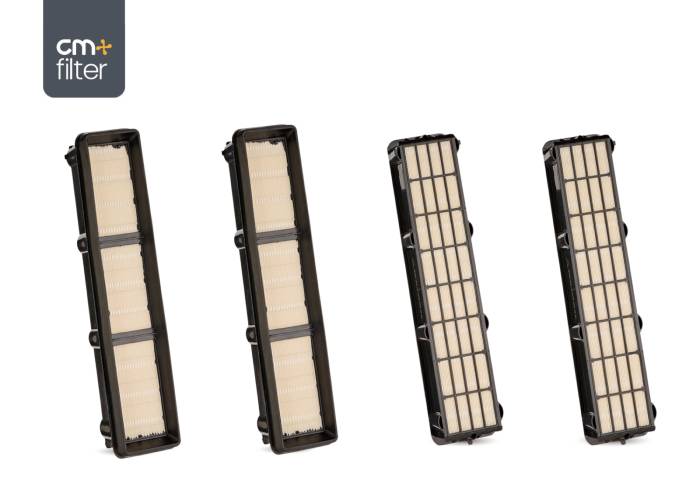
Panel Air Filters
Panel filters are flat and rectangular.
They are the most common type used in passenger cars and light machinery.
Advantages
- Economic
- Easy to replace
- Suitable for standard use
Applications
: Automotive engines, service machinery, or equipment with low-to-medium demands.
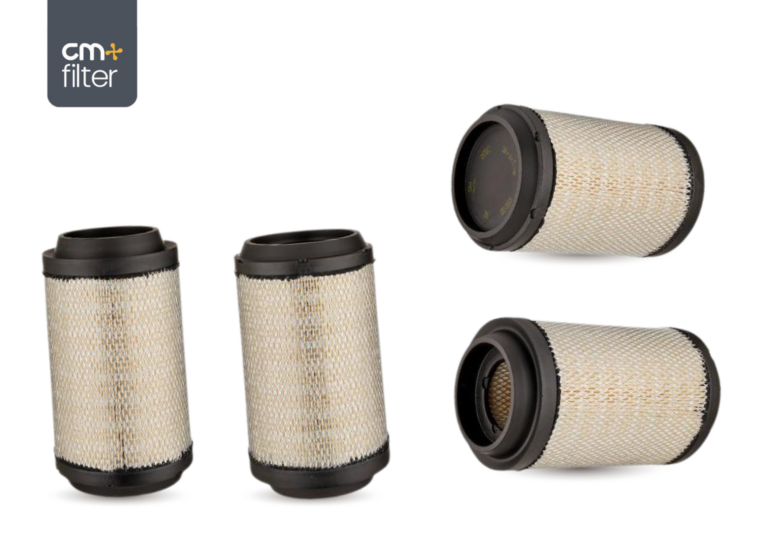
Conical air filters
Designed in a cone shape to maximize the filtering surface area and increase airflow.
Advantages
- Higher airflow
- Superior Performance in Demanding Engines
- Ideal for sports activities or high-demand uses
Applications
High-performance vehicles, machinery requiring large air intake, modified intake systems.
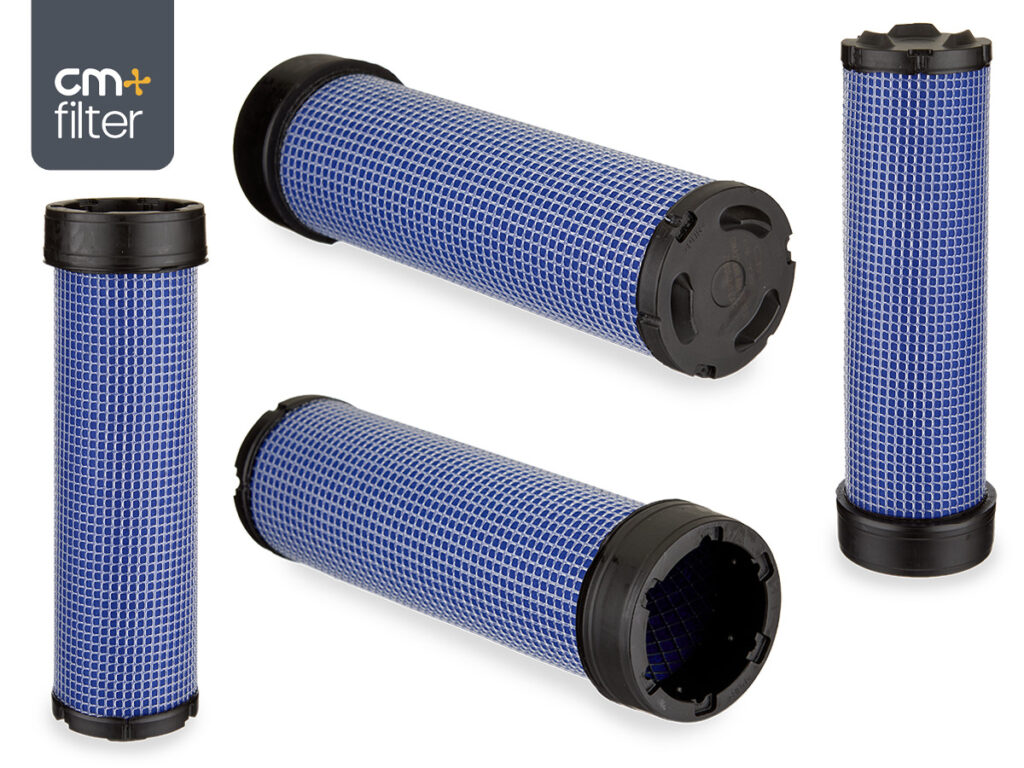
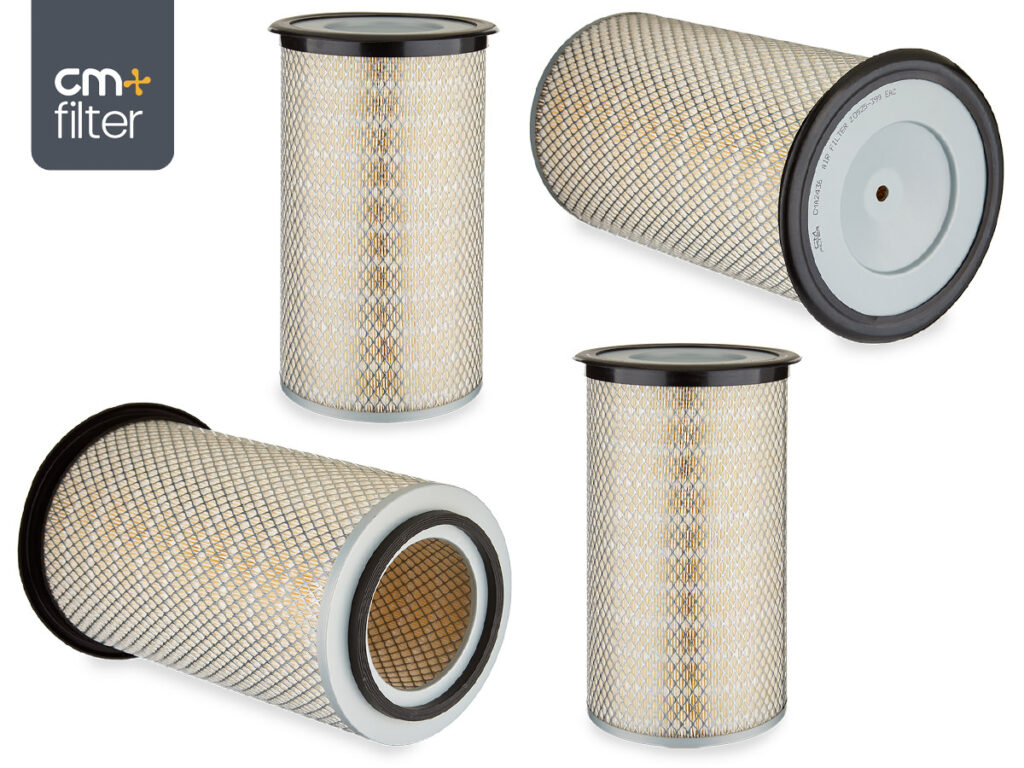
Cylindrical air filters
They are widely used in industrial and agricultural machinery and heavy-duty vehicles because of their strength and durability.
Advantages
- Large filter area
- Durability in dusty environments
- Greater particle retention capacity
Applications
: Public works machinery, industrial engines, trucks, tractors, generators, compressors, etc.
Oval Air Filters
Its oval design provides more filtering surface area in tight spaces.
Advantages
- Compact Cars
- High efficiency
- Better size-to-capacity ratio
Applications
Engines with limited space in the housing or air capsule.
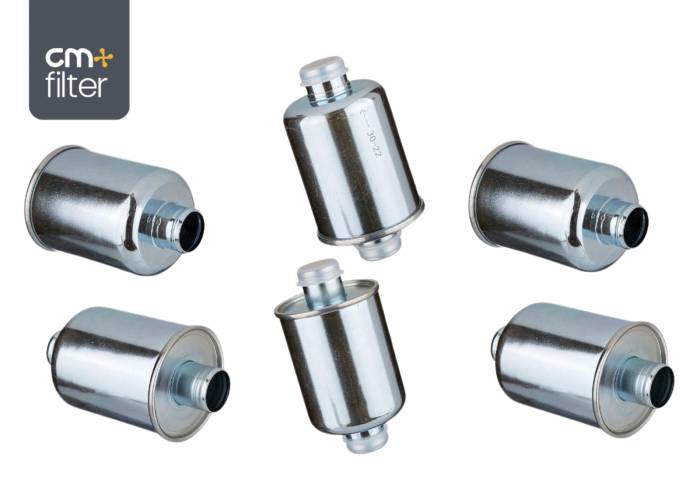
Prefiltration: Additional Protection in Harsh Environments
Prefiltration acts as a first barrier that traps large particles and airborne dust before they reach the main filter.
Advantages
- Significantly extends the filter’s service life
- Reduces maintenance costs
- Essential in areas with constant dust
Applications
Agriculture, mining, quarries, public works, off-road work.
How to Choose the Right Air Filter
To select the right engine air filter , you should consider:
- Engine type (industrial, agricultural, automotive).
- Environmental conditions (dust, humidity, sand, harsh environments).
- Required air flow rate based on performance and engine displacement.
- Available space in the housing (panel, cylindrical, or oval).
- Engine manufacturer’s recommendations.
- Equipment operating hours or mileage.
Choosing an inappropriate filter can lead to restrictions, a loss of power, or the entry of harmful particles.
Engine Air Filter Maintenance
Most manufacturers recommend changing the filter every 15,000–20,000 km in vehicles, although for industrial machinery, the interval is measured in operating hours.
You should check it first if:
- You work in dusty areas.
- The engine’s performance decreases.
- Consumption is on the rise.
- The pressure switch indicates saturation.
For industrial filters, preventive maintenance is key to avoiding premature failures.
Benefits of Maintaining Good Air Filtration
- Consistent power and a lower risk of performance loss.
- Lower fuel consumption.
- Less internal wear on cylinders and valves.
- Reduction of pollutant emissions.
- Protection for the lubricant and the turbocharger.
- Longer engine life.
Signs That the Engine Air Filter Is No Longer Working Properly
Although a filter may appear to be in good condition at first glance, it may be losing its effectiveness without becoming completely saturated. These are the most common signs:
- Progressive loss of power when accelerating or going up hills.
- Increased fuel consumption, even when driving habits remain the same.
- Jerking or slight vibrations in the intake.
- Darker-than-normal smoke from diesel engines.
- Unusual noises coming from the air intake.
- Activation of warning lights related to lean/rich mixture (depending on the model).
Detecting these signs early on prevents breakdowns and maintains engine efficiency.
What You Need to Know Before Choosing Your Filter
Keeping an engine air filter in good condition isn’t just a matter of basic maintenance—it’s a key factor in ensuring the performance, efficiency, and durability of any engine, whether in a vehicle, agricultural machinery, industrial equipment, or public works machinery. A clean, well-filtered intake system reduces fuel consumption, prevents costly breakdowns, and ensures that the engine always operates with the airflow and air quality it needs.
Choosing the right type—panel, cylindrical, conical, oval, or with prefiltration—makes the difference between optimal performance and strained operation. And performing regular inspections ensures that the filter does not become clogged prematurely, especially in dusty or high-demand environments.
With proper filtration, any engine can perform at its best for longer. That’s why choosing a high-quality air filter is a direct investment in the engine’s reliability, efficiency, and service life.